Support Shawn's writng with a donation

Monday, March 15, 2010

APOOO Book Club Review of All About Marilyn


When I requested to review All About Marilyn, some how I overlooked the word screenplay. Imagine my surprise when I opened the package and flipped through the book, as I do with all books when I first receive them. The last time I read anything that came close to this format was written by Shakespeare and called a play. However, Shawn James begins the screenplay with a little background information or what he called “Screenplay Basics.” Did I really need that information to enjoy what I was reading? No!

Marilyn Marie, at one point in her younger years, was a big time actress on a sitcom called All About Nikki. As with most child stars, she has to prove herself later on in order to get a part that is nothing like the character she used to play on television. One day while she was on a production set, her friend had written, a major incident occurs, triggering the change she had been seeking. Marilyn was leaving behind her life as Nikki Desmond, but would Nikki Desmond continue to be a part of her life forever? Will she be nothing but another washed-up actresses?

Mr. James brought drama. I can see how it would be the turning point in movie. If All About Marilyn was written in novel form I could see it then also. I did not expect the ending or any of it for that matter. But I did enjoy what I read. I am not sure if this is a new literary genre, but I would read more. I recommend readers of plays and those looking for a new type of reading experience to give this book a try.

I received this screenplay for review purposes from the author.

Jennifer Coissiere
APOOO BookClub

Saturday, March 13, 2010

Support Your Local Self-Published Author

They’re innovative, imaginative and creative storytellers who take the challenge of writing designing, distributing and promoting their own literature. Who are these pioneers of the pen? Self-published authors.

As a self-published author I buy other self-published authors’ books. Why? Because self-published writers are the future of the publishing.

Self-published authors introduce different ideas to reading audiences. In non-fiction self-published writers write about specialized topics in science, entertainment and history. That biography about an obscure historical figure? Produced by a self-published author. That book about a rare event in history? Written by a self-published author. A book about how to pick up ladies? Written by a self-published author.

In fiction self-published writers create fiction in categories considered too risky for mainstream publishing houses. That African-American fantasy novel or Urban Supernatural tale on the bookstore shelf? Probably came from a self-published writer. That comedy novel? Probably written by a self-published author. Golf-themed murder mystery? Probably produced by a self-published author.

Self-published authors created categories of fiction that didn’t exist twenty years ago. Urban fiction? Created by a self-published author. Street Lit? Created by self-published authors. Chick lit? Created by a self-published author. Each of these categories of fiction were described as unsellable by editors at major publishing houses and literary agents until some enterprising writer started selling thousands of copies. Now they’re imprints at many of the same houses that rejected them on the first query.

Self-published authors have big ideas but little resources. Many struggling writers like myself put these books together on shoestring budgets out of our personal savings and sell them out of the trunks of cars, traveling to trade shows or walking up and down the streets of downtown shopping districts. We believe in our projects, and have many more we want to share.

But we can’t produce them without readers. Readers who buy books.

So I’m asking everyone to support your local self-published author. Head over to Amazon and buy a copy of a self-published author's titles like mine. Better yet, go to your local bookstore and have them order a copy, so they’ll stock it on their shelf. If you enjoyed a self-published author’s book, tell your friends. Give them away as Christmas or birthday gifts. Give em’ away at the office Christmas party. The more books self-published authors sell, the more royalties authors make and can reinvest in publishing new titles.

Saturday, March 6, 2010

Harlem Book fair 2010


Harlem Book Fair 2010

Okay, last year at the Harlem Book fair I didn’t fare so well. I came home with all but one the books I brought to sell and lost over $400.00.

So why am I doing the fair again this year? I realize the opportunity to attend the fair is bigger than me.


Many in the African-American community complain about the quality of the books offered at the fair, how there are so many titles focused mostly on the negative experiences of African-Americans and not much else. However, few of those who complaining are willing to offer something different to the reading audience.


My mission as an author and self-publisher is to provide readers with positive stories about the African-American experience. If I want to share those stories with my audience I realize I have to put last year’s failure behind me and persevere.


I feel giving readers a choice is worth more than the money for me. The fair is my opportunity to offer readers a choice of what I believe is quality literature. Whether they choose to buy my books or not, I have to make every effort to allow readers to have that choice. People in America often take their freedom of choice for granted; many don’t truly appreciate what it is they have.


In areas like art, literature and even commerce many in the African-American community don’t realize how a lack of diversity has limited their freedom of choice. Books open the world to readers, and when there aren’t many types of books offered to readers their opportunity to view the world becomes narrowed. Different stories give readers different perspectives, and expand people’s understanding of the world around them. Venues like the Harlem Book Fair need to have more than one type of Black experience offered to readers. I’m hoping to offer an expanded selection of titles along with a few surprises.


The Harlem Book Fair will be July 17-19 2010 on West 135th Street. If you're in the New York area then, Come to my table!

Wednesday, March 3, 2010

How Stars Go Broke


How Stars Go Broke


It’s not common for some celebrities to announce their mega million dollar salaries in the media. Big numbers like Fifteen, Twenty, Twenty-five or thirty million dollars for a movie role. While these high salaries are quite shocking, what’s more disturbing is how quickly these enormous fortunes can slip away.

Numerous entertainers like Toni Braxton, Nicholas Cage, Sinbad, and the late Michael Jackson have found themselves bankrupt or in severe financial distress. Many more are on the brink and don’t even know it.

How does a star making millions of dollars go broke? Well, it can happen very quickly once expenses are broken down. Taking those multimillion dollar salaries apart after agent commissions, manager commissions, taxes and other expenses, there isn’t much left available for a celebrity to maintain their lavish lifestyles long-term. Over time, celebrity salaries actually go down while their expenses stay the same. This sets up a recipe for financial disaster. All it takes is a major illness, a tax issue, a divorce or a long-term period of unemployment to put a star’s finances in jeopardy.

What many don’t know is that celebrity careers have a cycle very similar to the economic cycle: Start, Rise, Peak, Decline, and End. Oftentimes, as a star cycles through the early stages of their career, revenues increase and they become accustomed to living within the financial means of their salary. However once a celebrity reaches the peak stage of their career, revenues and job opportunities to create revenues begin declining. This situation isn’t so bad if a celebrity adapts their spending to the declining revenues. However, in many cases celebrity spending often stays the same as the peak level of earning. Worse, some celebrities don’t monitor their accountants or managers (who often have power of attorney and authority over finances) to make sure they’re paying federal taxes, state taxes and property taxes.

This formula of diminishing revenues, poor education, and a lack of financial supervision and planning is what leads many celebrities going broke or going bankrupt during the declining and ending phases of their careers. Not knowing who’s handling their money or how much money remains can lead to multimillion dollar back tax bills, property liens, foreclosures, lawsuits and a financial nightmare.

In All About Marilyn I detail how celebrity fortunes can change in an instant. Over the course of a few years, the fictional Marilyn Marie goes from a TV star with a promising career to a struggling actress scraping by to pay her bills. This happens to so many celebrities in real life; the cancellation of a TV show, or series of box-office failures can lead to years of unemployment and a slew financial long-term problems. I want people to understand that these financial difficulties can happen to anyone even in the best of situations and that anyone can fall on hard times. It’s often easy for us to judge celebrities from what we see and read in the media, but we often don’t understand how quickly any of us can also wind up in a similar financial situation.

Saturday, February 27, 2010

All About Cover Art

I was gonna post the APOOO Book Club review of All About Marilyn, but I want to wait for that review to be posted on their site. So I'm posting this article about Marilyn's cover art instead.


All About Cover Art

(WARNING! LOTS OF PICS!)


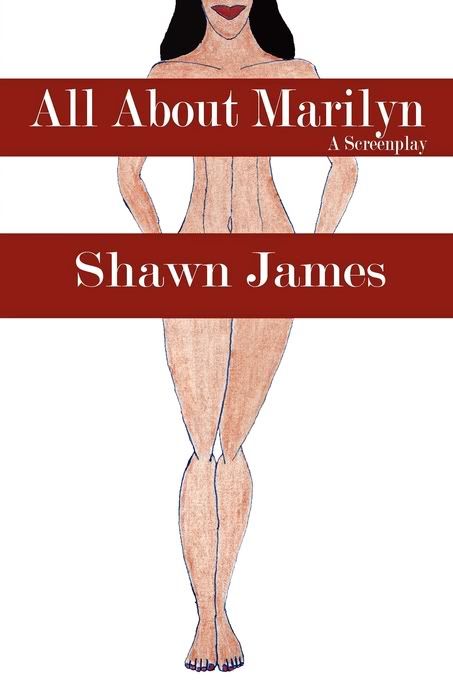
All About Marilyn cover

Stop the presses! There’s a Nekkid lady on the cover o’ Shawn’s new book! Cover your eyes! Think of the children! THINK OF THE CHILDREN!


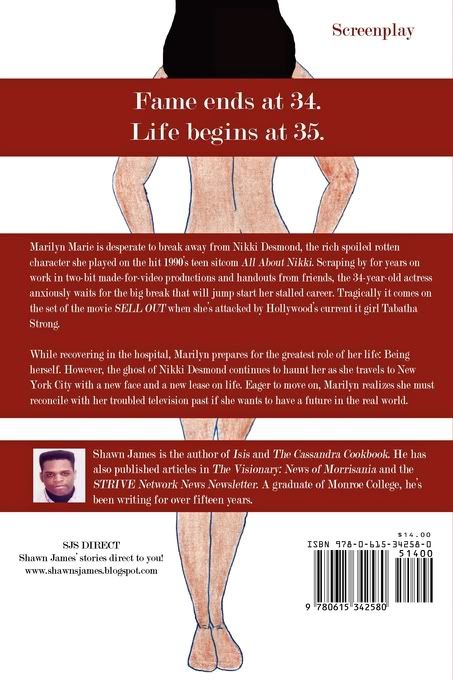
I know that's the reaction of some to the All About Marilyn cover. However, there’s nothing sexual or titillating about the art on this cover. These pictures relate directly to the story in the book.


The concept for the All About Marilyn cover is an art nude leaning towards an abstract style. The bright red lips are supposed to draw people towards Marilyn’s face where the story of her picture is told. I deliberately drew both pictures with a minimal lines so readers would only be drawn to those red lips.


I got the inspiration for Marilyn’s cover reading the newspaper back in April 2008. Art photos of Carla Bruni (You'll have to Google Carla's pic cause I'm THINKING OF THE CHILDREN!) were featured in a New York Daily News article. The nude picture was modified with awkward black censor bars over her breasts and her hands which covered her genitals. Those censor bars and the sensationalized copy kept us from seeing the artist’s orignal vision; taking our eyes away from the model’s face, the composition of her body language, and the real story in the picture.


By censoring picture, the photographers’ orignal vision became perverted. The black bars distorted the details in the photograph’s story, forcing the viewer to come up with an incorrect image of what they saw in the facial expression and the composition of her figure. And when it came to Americans, a simple art nude becomes sexualized and with the simple addition of a pair of black bars and a sensational cover story.


Understanding how some Americans sexualize art that features nudity, I decided the censor bars would be an integral part of telling Marilyn’s story. Along with the half-face, they keep the picture of who is Marilyn Marie incomplete. This unfinished image of minimal lines and red censor bars draw the viewer’s eyes to the red lips of her face which tell the story of a strong, confident black woman who is being kept from revealing the truth about herself to everyone.


Developing this concept took multiple drawings and many, many, many tries to get right. Art is a very instinctive process; it has to “feel” right. It took a year to finally created something I felt comfortable presenting. The cover concept for this “Abstract Sista” front and back are a combination of pencil Ink, colored pencil, acrylic paint, a laser printer, and Photoshop.


Fist draft cover


This was the first design I came up with for the All About Marilyn cover. Don’t have a color jpeg, (old computer died) but it was hand-drawn, and handpainted. Featured in the back matter for The Cassandra Cookbook on page 264, I actually considered using this art before all the negative reviews about the cover for The Cassandra Cookbook made me rethink it. Looking at it now, great googly moogly it looks like crap. Her entire body looks like rubber and her right foot looks broken.


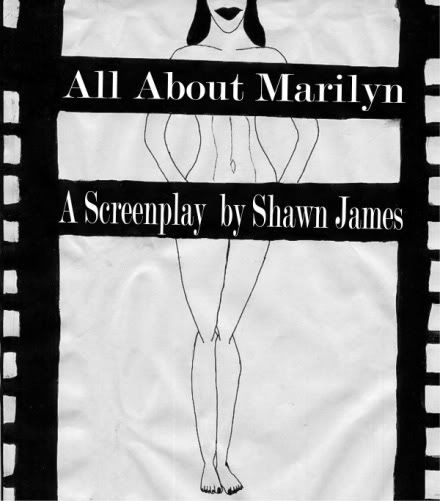
2008 Front cover


2008 Back cover


Cover concept #2 was still very rough. Sketched up some new art with cleaner lines. I used Microsoft’s ancient Picture it! software to clean up the censor bars and the filmstrip concept. I went for a full abstract concept on this, wanting to focus only on line, composition and form so the reader’s eyes would be drawn only to the red lips on the white page. In this concept, decided to give the back cover the abstract theme, making it All About Marilyn; her story would be between the pages of the book.


This art was to be final, (again) but after the Harlem Book Fair of 2009 I seriously rethought Marilyn’s cover concept. I was really getting heat about my interpretation of Cassandra Lee on the cover of The Cassandra Cookbook and I didn’t want Marilyn’s story dragged down into that light-skinned/dark-skinned nonsense, or worse some people implying that the character on the cover was white. I didn’t want those narrow minds misinterpreting my art and perverting it the way they did the Bruni photo.


Worse, I didn’t want to be branded a sell-out when my intention was to make the cover art about lines, composition, and form. These fundamentals of art are often hard to see when color is added to a drawing; this is why many art photographers prefer to shoot their models in black and white. With those two colors and the shades of gray, we get a better understanding of the story the photographer is trying to tell through the lines of the body and the body language of the model. And to my chagrin, those blasted censor bars didn’t line up front and back. So it was back to the drawing board. again. This time I was for a looking for a compromise that would allow me to maintain my original concept and satisfy the reader.


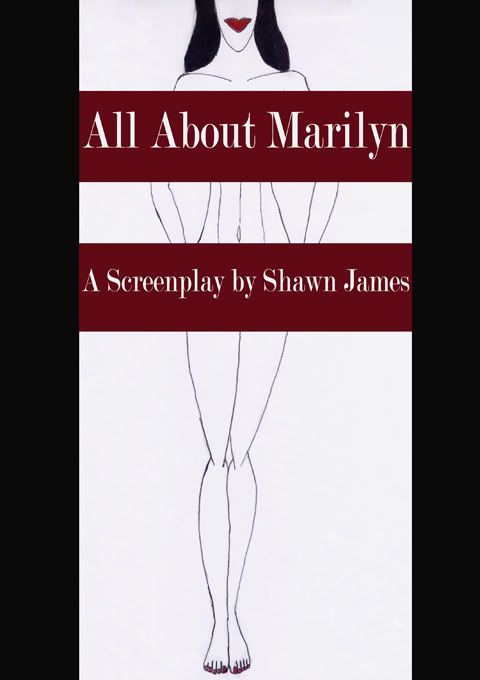
All About Marilyn cover


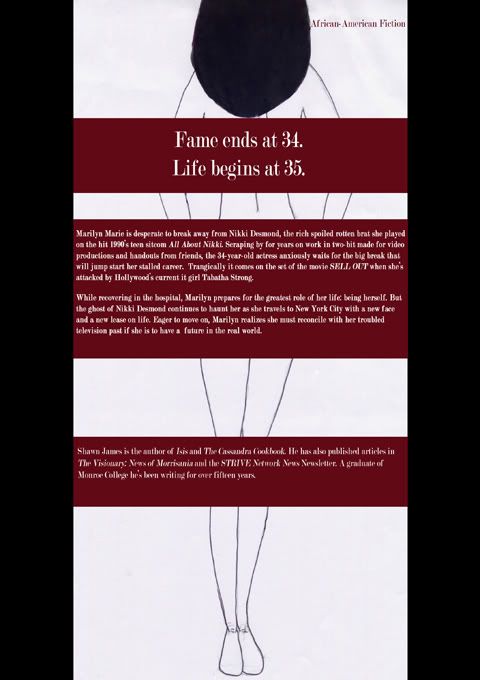
back cover 2

Cover Concept #3 I took this design through five Lulu test copies up to the final finished product. Went with high key style on the abstract art so the colors wouldn't distract from the my original concept.


With the help of Adobe Photoshop Elements Software, the red censor bars line up on the front and the back of the cover. From head to toes, Marilyn is the same size front to back. I smoothed out the rough spots in the art (dust, specks, an unevenness of the hair from front to back), and brightened things up (I had a literal headache trying to denote the difference between the CMYK red that prints on POD presses and RGB red that’s on every computer monitor)


I made sure the white letters could be more readable on the back, and I placed the notation “A Screenplay beneath Marilyn’s breast bar because I felt it was more discrete than the awkward placement on the bottom bar with my name in the second concept. Hopefully, the red lips on the face will be the first thing people look at.

Saturday, February 20, 2010

Publishing a Screenplay In Paperback- Am I Crazy?

Fiction. Nonficition. African-American readers mostly buy books in these two categories. So why the heck am I publishing a screenplay instead of a third novel?

Do I have money to waste? Nope. I’m currently unemployed and still looking for a job almost two years later. But rather than let All About Marilyn sit in a box gathering dust, I thought it would be more effective to use my script as a way to help other brothers and sisters learn.

I understand while African-American audiences enjoy black cinema, there are very few tools to teach brothers and sisters about the craft of screenwriting. Sure African-Americans can find a DVD of classic black movie like Do The Right Thing, Hollywood Shuffle, Boyz N The Hood, Straight Outta Brookyln, House Party, and New Jack City in stores, but when an aspiring black filmmaker tries to find a copy of a script of these to learn the way these writers told their stories there’s next to no material anywhere.

In my search for African-American screenplays to study while writing All About Marilyn, I ran into roadblocks. Lots of roadblocks. Most of the screenplays available online, in paperback, and at the library were primarily of white films. Worse, many had numbers down the side complete with camera angles. These shooting scripts, formatted for later on in the production process were of little use to me. Shooting scripts often confuse aspiring and first-time screenwriters; some even incorporate those numbers and camera angles into their stories!

I understand that in order for there to be future Black filmmakers there must be hard copies of screenplays for brothers and sisters to read so they can learn how to write a script. It’s very important for African-American filmmakers to have copies of speculative scripts (a script that only focuses on the story) so they can learn the proper format and technique for telling a story for the screen. More importantly, it’s important for aspiring African-American screenwriters to have copies of scripts of African-American films and TV shows by African-American writers so they can see stories about our own experiences from our own writers.

My mission with this book is to get African-Americans excited about screenwriting. Researching the industry, I’ve learned that out of the 14,000 members of the Writers Guild of America, less than two percent are African-American. And out of that 14,000 membership, only 300-500 writers work in a given year regardless of race or ethnicity. Breaking down those numbers, two percent of four hundred means at best a handful of African-Americans are writing scripts in Hollywood at any given time.

Reading those paltry statistics, there’s a desperate need for more black Screenwriters. Over the past two decades, Black films have gone from a flurry of major studio releases to a trickle of independent, self-produced films by filmmakers like Tyler Perry and T.D Jakes. Without more African-Americans behind the camera to tell the stories about the black experience, there can be no black films. Worse, an entire generation of Black people will not know what it is to see stories featuring people who look like them sharing their experiences onscreen.

Saturday, February 13, 2010

Hollywood in Black and White

We see them. For a moment they’re on movie screens, televisions and the covers of magazines. They portray strong mothers, sassy siblings, supportive girlfriends, caring wives and the stuff of many a fantasy in our imaginations.

Then, in an instant they’re gone.


Who are these mysterious females? African-American actresses. Every generation including mine has had a series of beautiful sistas who are touted one minute as someone who will become the next household name. Then in a year or two, after a few memorable performances in a handful of films or TV shows, they disappear from the spotlight and their names are forgotten by everyone.


Light skinned or dark skinned, fat, or skinny, short, tall, young, or old, award winning or reviled, I noticed that the same pattern transpired in the careers of most of the sistas I researched. A short surge of popularity, followed by a quick fade into obscurity. In most cases these ladies had the talent to take their craft to the next level, but there was no work available for them. Why?


It turns out that there were numerous reasons why most Black actresses weren’t working as regularly as their white female counterparts. As I explored the barriers sistas faced in finding employment in Hollywood it painted a picture of four Tinseltowns: One Black, one White, One Male and one Female, separate and unequal. Compared to everyone else, Black actresses faced the most obstacles in their career paths, and that’s why their careers didn’t have the longevity or diversity of their white female counterparts.


The first of these obstacles is an access to screenplays written by African-American screenwriters for African-American audiences. Currently out of 14,000 registered writers in the Writer’s Guild of America, less than two percent are African-American. And out of that number of 14,000 less than 500 work in a given year. And out of those 500 working writers only a literal handful are African-American or minority.


Because of this severe shortage of screenwriters of color, African-American Actresses’ have next to no access to scripts or anyone willing to write material tailored towards their strengths. Most of the few African-American screenwriters who do work are male and tend to write material for male protagonists because it’s easier to sell scripts with a male lead than a female one. The price of a screenplay can be as much as three to five percent of a film’s production budget, so it’s often more lucrative for a screenwriter to write a script with a white male lead than a black female one. Three to five percent of a $75-$100 million budget for a script featuring a white male lead character pays a lot more money to a screenwriter than three to five percent of a film with a $2 to 10 million budget written with a black female lead character.


Because there is so much more money to be made writing roles for White male, White female, and Black male leads, than Black female ones, the parts for Black actresses that are available are often small roles that are underwritten and underdeveloped. Without writers dedicated to crafting and tailoring material to fit a specific black actress, most Black actresses often are stuck playing the same roles over and over again.


The second obstacle Black actresses face in developing their careers is the lack of support for African-American films from executives in the movie industry. In a business environment that is 98 percent White and male, many executives will not support films with African-American female leads out of fear they won’t be profitable. While there have been great successes in mainstream African-American films with female leads like Waiting to Exhale, Set it Off, Soul Food, and Precious movie executives can point to numerous financial failures in recent African-American films they’ve invested in, and use these flops as a reason not to invest in films featuring African-American female leads.


Without the support of studio management to assist in developing their careers, most African-American actresses have no access to financing for projects they want to develop or a network of theaters to distribute them even if they get them produced. Oftentimes, if African-American actresses want regular work (not necessarily quality projects) they have to go outside of Hollywood to work in independent films. Many of these low-paying low-budget projects (some pay as low as a few hundred dollars, others pay nothing at all) have limited exposure. Unless these films have a serious financial backer like Oprah Winfrey or Tyler Perry, who have the money to get them distributed into theaters, the only way audiences see these movies is on home video or at film festivals.


The third obstacle African-American actresses’ face in their career path is competition from their Black male counterparts. Some Black male leading actors fear that by having a black female leading lady as their co-star their film project will be labeled a “black” movie and not perform well at the box office. So they will insist upon having a female co-star that is Hispanic, White or Asian in the hopes of selling to a broader audience of moviegoers. Some will go as far as insisting upon their entire supporting cast isn’t black so the finished film would be more competitive at the box-office.


The final obstacle African-American actresses face in their careers is a lack of support from African-American audiences. Even when studios do release projects with Black actresses in lead roles, there hasn’t been much of an audience of ticket buyers in the African-American community. From critically acclaimed films like Akeelah and The Bee, Oprah Winfrey’s Beloved, and The Secret Life of Bees, to critically panned films like Phat Girlz, films featuring African-American female leads do not perform well at the box-office. The failure of these films at the box office doesn’t encourage anxious studio executives who consider African-American films to be a tremendous risk to make more films with African-female American leads, or to tell stories featuring the experiences of African-American women. Without the audience there going out to support the films, executives feel there is no real reason for studios to produce them.


In spite of these numerous obstacles, many sistas persevere. They fight hard for every role, and put forth the best efforts possible in their performances. While many of my sistas don’t have the wealth or fame of their white female counterparts, they make the performances in the roles that they do receive have a lasting impact on viewers like myself.


Listening to the interviews of numerous black actresses telling their stories about struggling in Hollywood was the main reason I was inspired to write All About Marilyn. I wanted to detail the racism, sexism, and misogyny that prevented black actresses from having the careers their White contemporaries enjoyed. While I’ve read articles in Ebony and Essence that told readers about the plight of black actresses, I felt audiences needed to be shown some of the experiences a black actress dealt with on a daily basis. I felt if readers met a character like Marilyn they could relate to and identify with, they’d understand the how the business of Hollywood colors what we see onscreen.


My hope is that Marilyn’s story will spur African-American audiences to start going out and supporting African-American films again. I’m also hoping that more African-Americans start learning the crafts of filmmaking and screenwriting, and focus on careers behind the camera. There are a million shades of brown in the Black community, and I’d love to see those stories color the experience of what I see onscreen.